Why jiu-jitsu became part of my business philosophy
Then I saw for myself that sport transforms more than your physical shape. Sport changes everything. It changes the state in which you talk to partners, handle conflict, respond to aggression and manipulation, and choose between several scenarios.
I came to this not through theory but through crises, when the only way to regain clarity of thought was to walk out of a training session having left all the emotions and tension on the mat. At the same time, I still haven't mastered the balance between load and recovery: I've had my share of injuries, because the body needs rest and I don't always give it that chance.
Everything I can say about sport in business is not a universal instruction. It's personal experience built from training sessions and injuries, negotiations and victories — and from trying to learn not only to push myself, but also to stop in time.
From sambo to jiu-jitsu
I started sambo at 13, when I wanted to become stronger and learn to defend myself. It was an impulsive decision, not a deliberate one. Wrestling helped me feel more confident, but back then it didn't become a permanent part of my life.
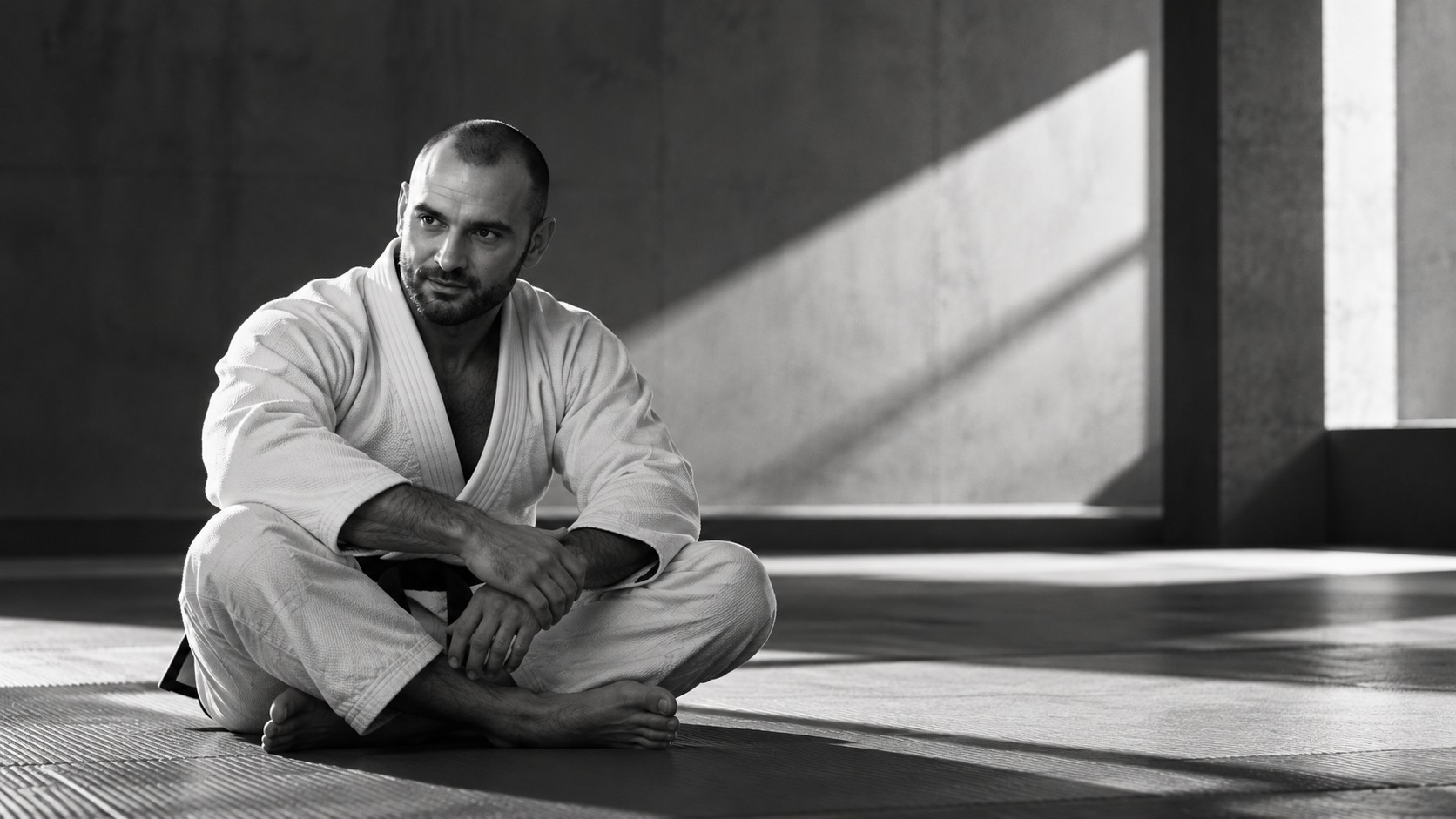
Much later, I came back to grappling with a different need. During one of the hard periods in my business, I realized I needed an extra source of energy, and around 2021–2022 I started doing jiu-jitsu. A school friend influenced my choice: we used to go to sambo together, then he switched to jiu-jitsu and described it as a more technical style of grappling. He put it this way: "Sambo is a knife, and jiu-jitsu is a samurai sword." That's how I made my choice.
For me, this sport turned out to be about more than physical strength. On the mat, you constantly run into limits: someone is stronger, someone is faster, someone has better technique. You win or lose, and then you analyze what exactly happened. It disciplines not the body but the way you think — the habit of analyzing a result instead of just living through it.
Not discipline, but a passion with clear progress
I wouldn't call my passion for jiu-jitsu discipline in its pure form. For me, discipline means doing something important but not much loved every day: morning exercises, breathing practices, cold water. I know it's good for me, but I don't always make myself do it.
Jiu-jitsu is different. I wanted to go to training three, five, sometimes ten times a week — not to strengthen my willpower, but because it genuinely captivated me. The feedback in this sport is very clear: yesterday you were losing to someone, today you've started winning; yesterday they were one belt above you, and later you can compete with someone two belts above.
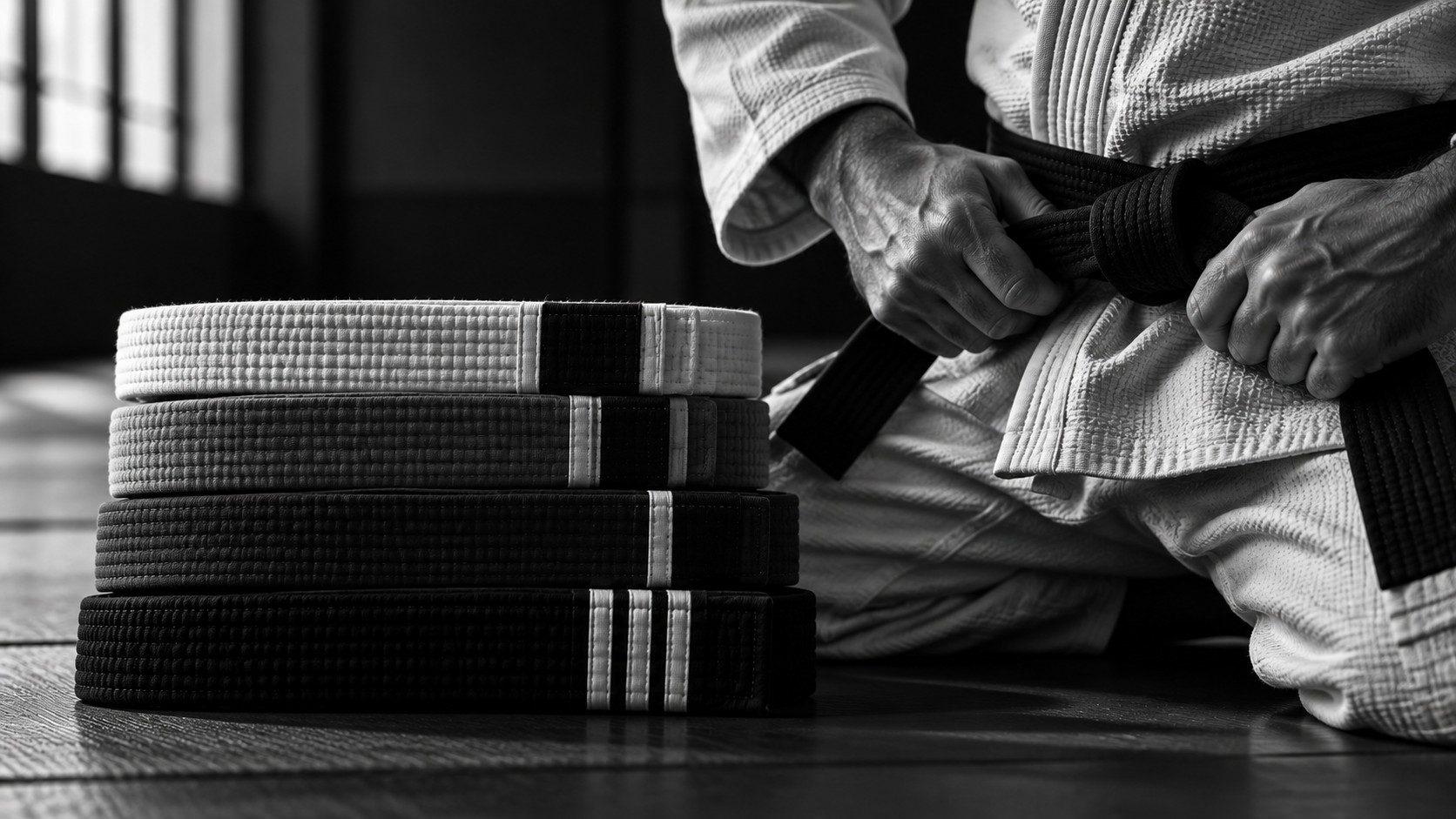
Jiu-jitsu has an interesting kind of gamification — a system of belts and stripes that makes progress visible. You see your opponent's level, you understand how long they've been training, and that helps you get your bearings at competitions. You can also track your own path better.
Why I negotiate better after training
At some point I realized that one important decision a day can be more useful than ten hours of endless office work. There were periods when I trained three to four hours a day and then made one or two calls. But those conversations were so rich and strategically important that quality outweighed quantity.
After an intense grappling session, it was as if I left all the excess emotions on the mat. I came out tired but fresh. I don't know how to explain it properly from a biological point of view, but I'd get a window of an hour or two when I was especially good at solving complex problems and could negotiate anything with anyone.
In that state, it was much harder to provoke me emotionally. If the other person deliberately provoked me or said unpleasant things, I didn't start arguing or react impulsively. I looked at the situation coolly, reasoned calmly and moved toward my goal. Today I often schedule important negotiations right after a workout. If you've just rolled out of bed and gone to the office, your chances of the same result are already 50/50.
What jiu-jitsu taught me to see in defeats
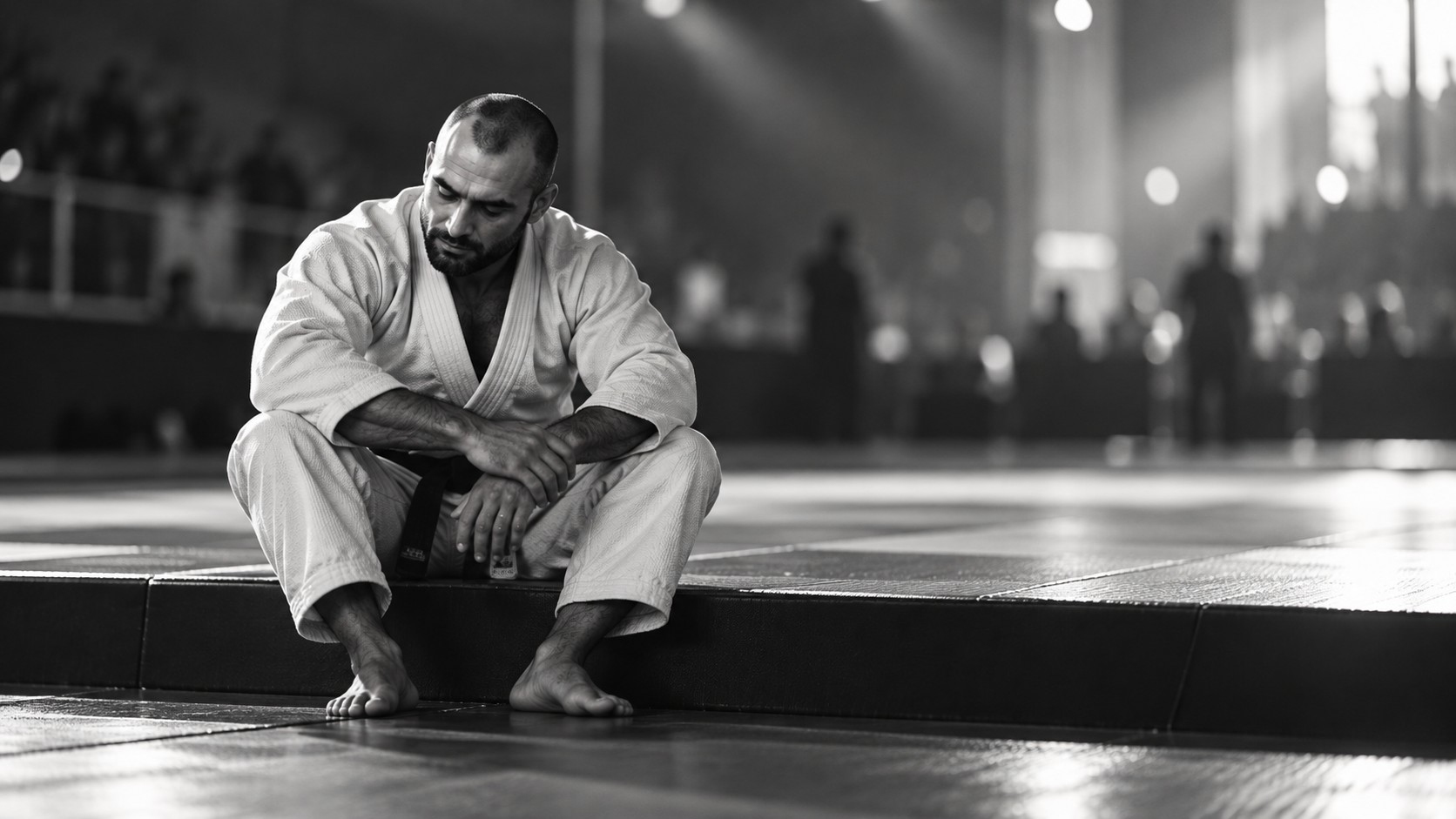
I take defeats calmly. Since I haven't devoted my whole life to jiu-jitsu, I can't demand that I win every competition. Of course, I want to win and I try. But first and foremost, a competition is material for reflection for me, not a confirmation of status.
After a loss, you can analyze the details: which technique beat you, where your defense failed, what needs work, and whether you can adopt that technique yourself. A telling example: when I decided to return to jiu-jitsu, I signed up for the World Championship, one of the most prestigious tournaments in the sport. I trained every day for two months and cut weight for my division — minus 10 kg. And at the tournament I lost within the first 40 seconds.
But winning wasn't my goal. I needed the competition as motivation to train, so I took the result philosophically. Later, when my preparation became more serious, I was already taking gold medals.
I still remember almost all my losses, but not all my wins. Business works in a similar way: a mistake is useful not in itself, but only if you're ready to look at it without self-deception. To admit where a hypothesis failed, what you missed in the product, which conversation you handled wrong and what needs to change in the next attempt.
Sport and startups develop different skills
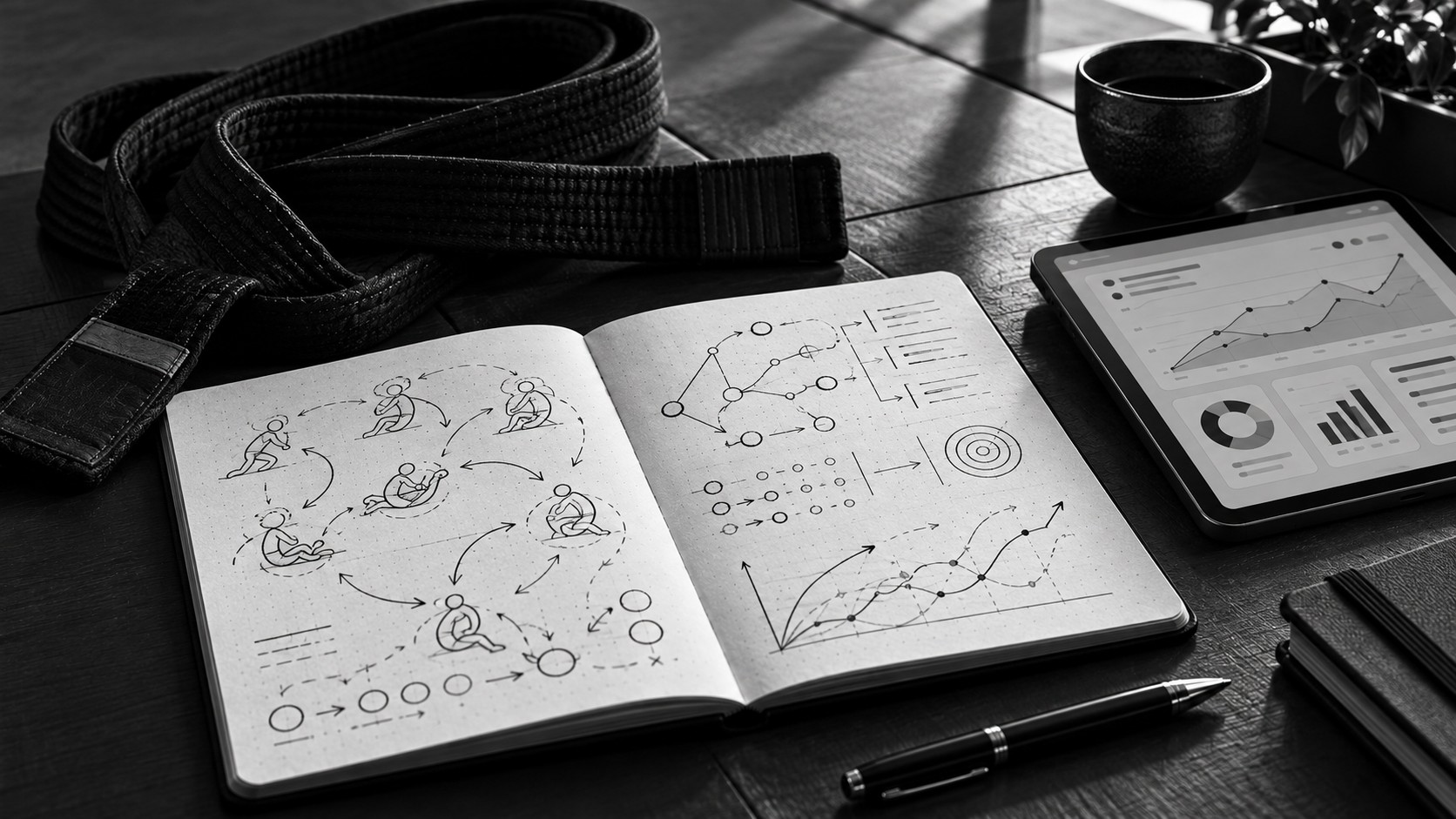
In sport, results depend on routine and repetition: training, sleep, nutrition, recovery, a clear schedule. A startup works differently. There you constantly have to change, adapt to the market, talk to users, partners and competitors, test hypotheses and look for a formula that works.
I see that for the founders I work with, the hardest part of a startup is not scaling or raising money, but finding the moment when product and market finally fit. That requires being open and creative — and this, too, is not an innate trait but a skill you train just like technique on the mat: constantly testing hypotheses, recording results, changing tactics and being ready to see something new. Often not what you wanted to see in the first place.
In this sense, jiu-jitsu is a reminder that work without a system doesn't get you far. A startup teaches the opposite: a system that was right yesterday may need rebuilding today. In essence, speed of iteration matters more than confidence in your first idea: success is determined not by how tightly you hold on to your initial hypothesis, but by how quickly and honestly you test and change it.
A mistake I'm still correcting
Passion is easy to confuse with unlimited resources. At my peak, I had up to 12 training sessions a week, often two a day — a private one and a group one. I trained with enthusiasm and didn't notice that my body needed rest.
Today I honestly admit: recovery isn't my strong suit yet. I understand that the body needs time, but I don't always give it that chance. This has led to injuries, including a period when a wrist injury kept me out of jiu-jitsu for almost a year and a half.
My main challenge now is not to get injured. I want to do everything at 100%, but with an injury you have to work carefully: lift less weight here, skip the usual load there, and sometimes stop altogether. It's not easy, especially if you're used to pushing to the limit. I think entrepreneurs know this feeling. When you love what you do, it seems that one more push certainly won't hurt. But sometimes the stronger decision is not to add load, but to take a pause.